
Vanitas paintings, popular in 16th- and 17th-century Europe, use objects to remind viewers of the fleeting nature of life, the inevitability of death, and the limits of earthly pleasures. Each carefully chosen element carries a symbolic message, encouraging reflection on mortality, morality, and what truly matters. Here’s a closer look at some of the most common symbols and what they mean.
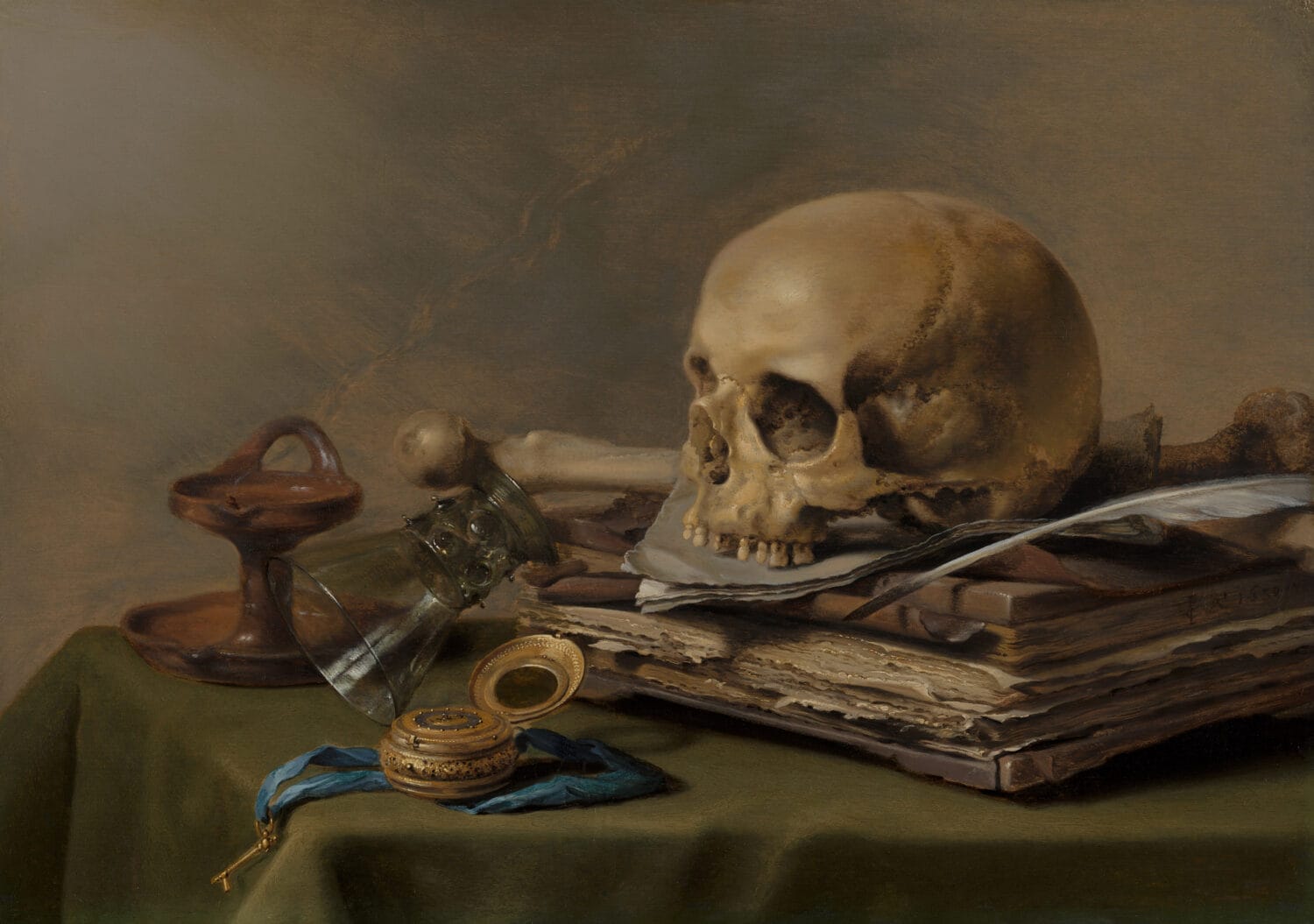
Skulls
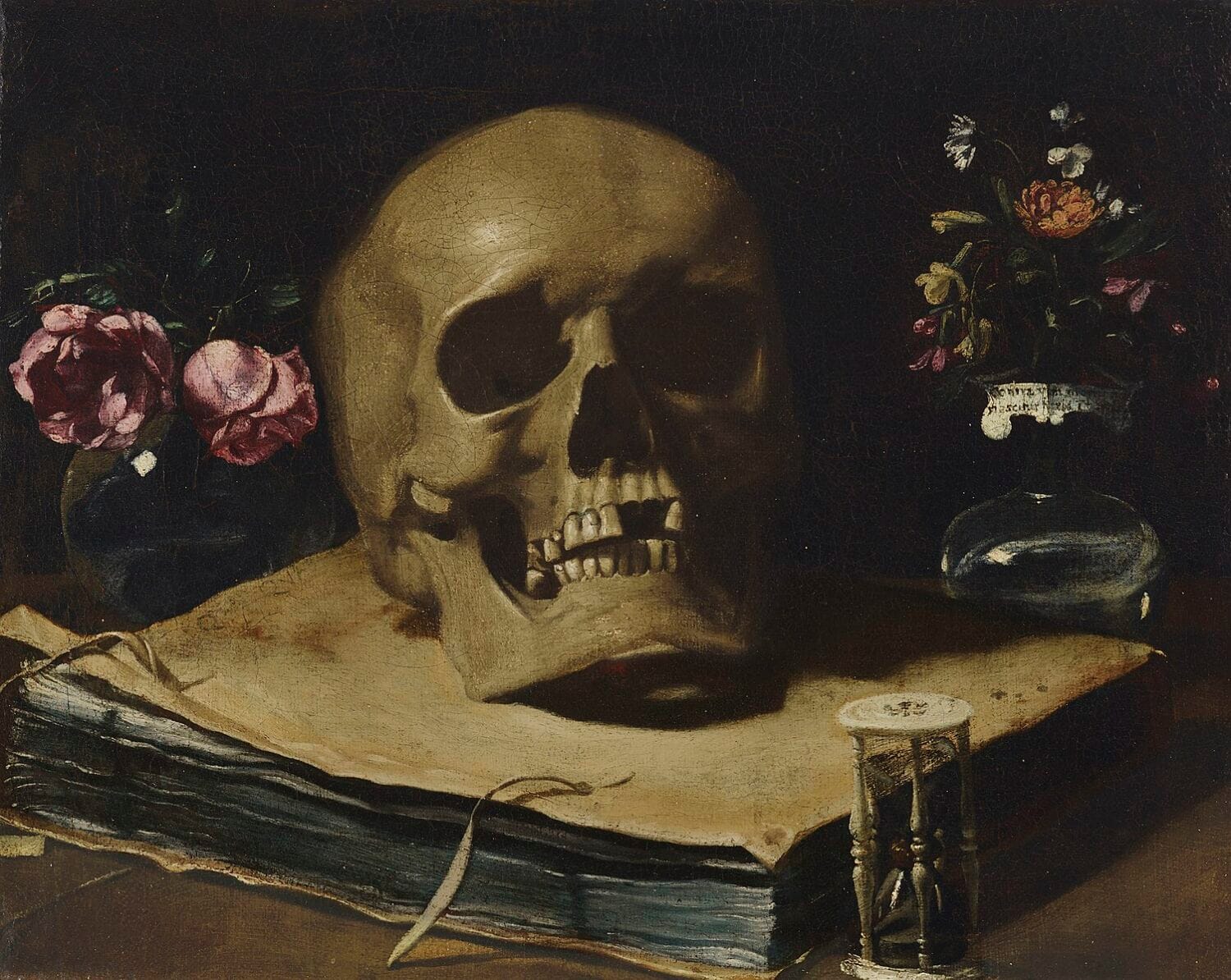
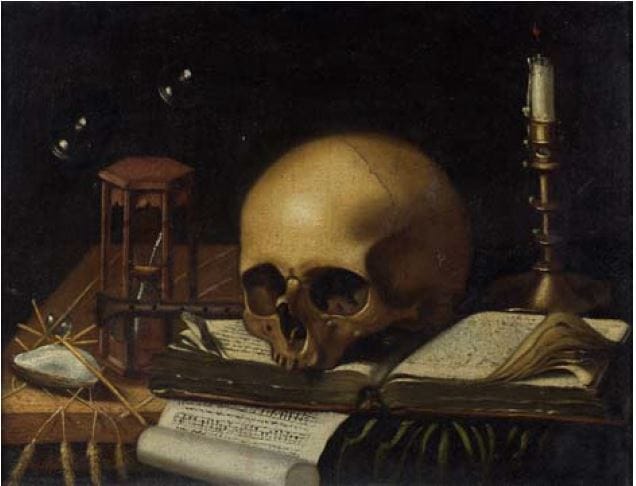
Skulls are the most iconic vanitas symbol, appearing in almost every composition. They offer a stark reminder that death comes for everyone, regardless of status, wealth, or beauty. Their presence interrupts the illusion of permanence, inviting viewers to consider life’s brevity and the ultimate futility of chasing worldly success.
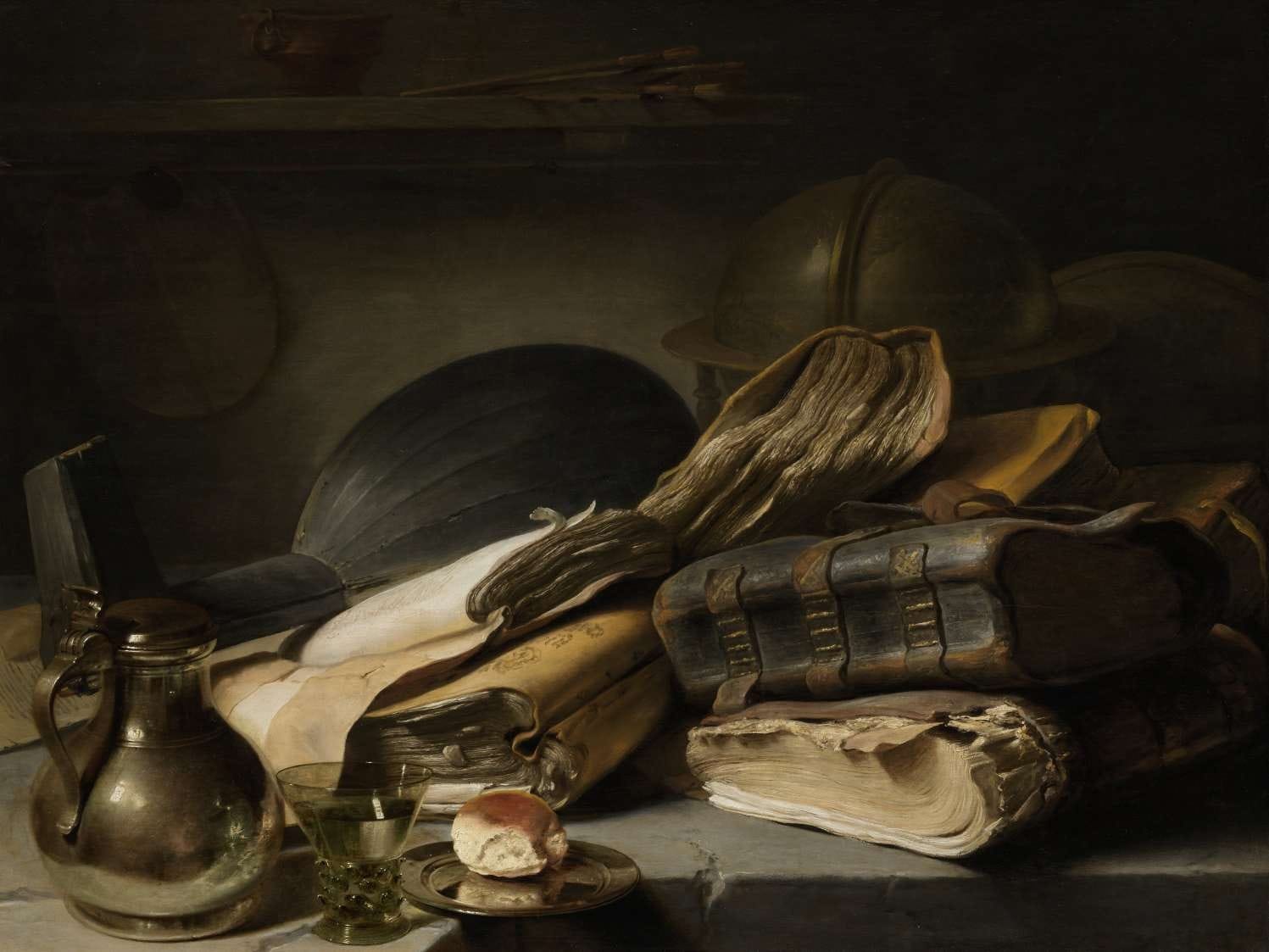
Books
Books represent human knowledge, learning, and intellectual achievement. In vanitas paintings, however, they also point to life’s limitations. No amount of wisdom or study can prevent death, and even intellectual pursuits are temporary. Their inclusion encourages reflection on the value of knowledge alongside spiritual and moral awareness.
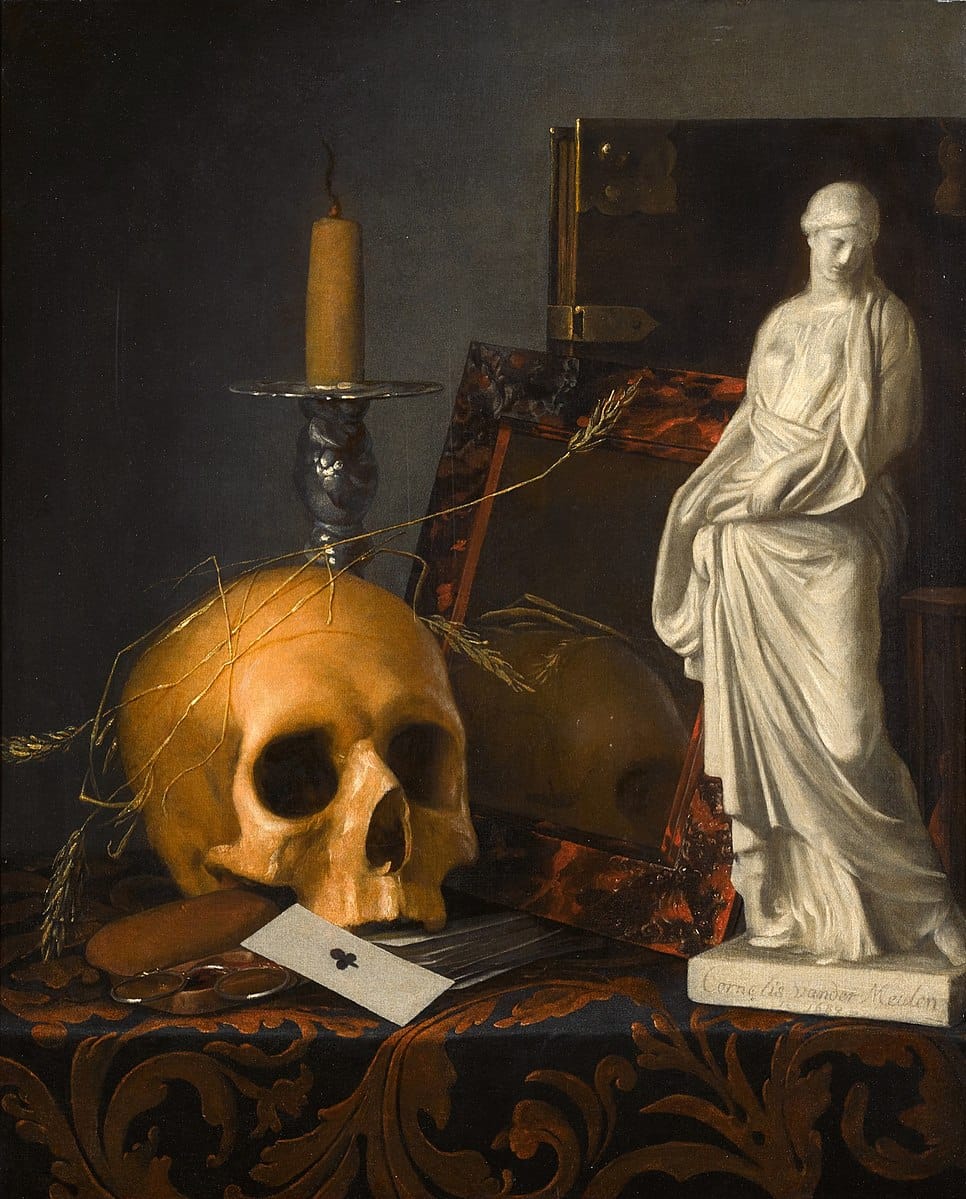
Candles
Candles symbolize the passage of time and the fragility of life. A burning candle reflects the present moment, while a snuffed or melting candle signals mortality. The gradual depletion of wax mirrors the fleeting nature of existence, reminding viewers to cherish life while it lasts.
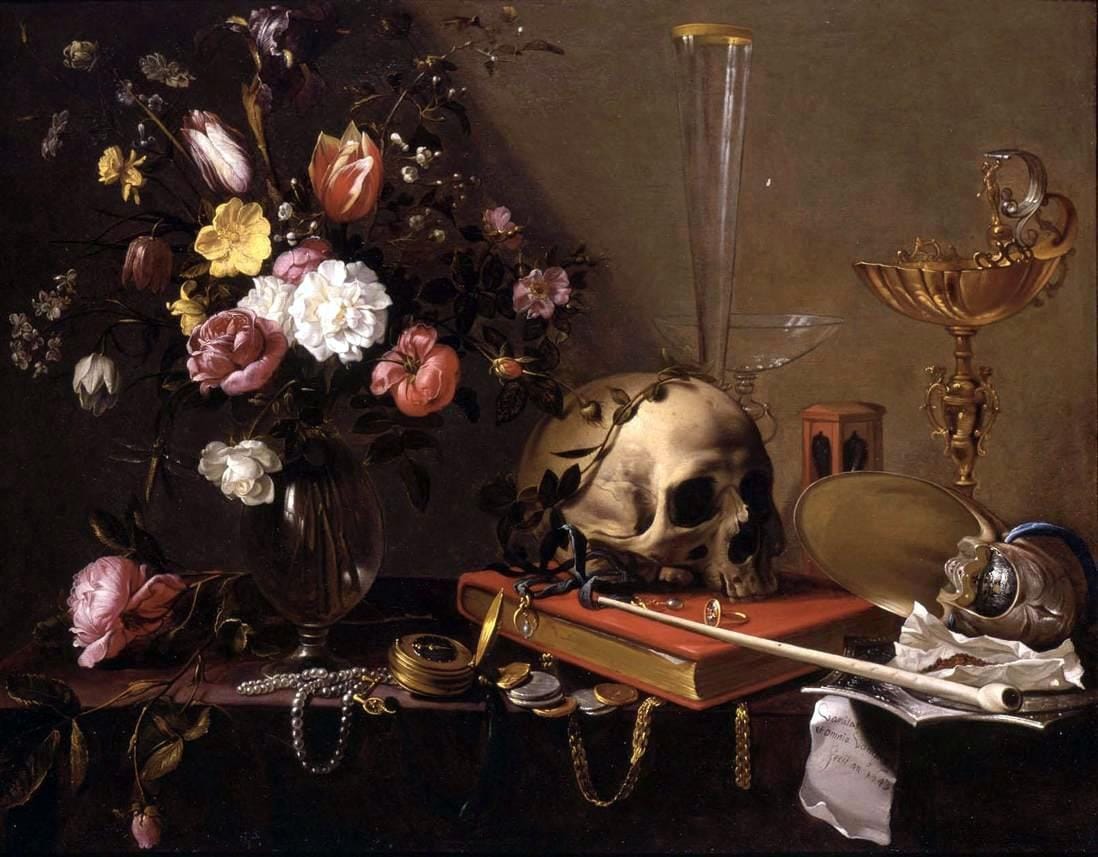
Flowers
Flowers are vibrant symbols of beauty, vitality, and the pleasures of life. Yet their blooms are short-lived, and petals inevitably wilt and fall. This natural cycle underscores the impermanence of all living things, reminding us that even the most alluring aspects of life are temporary.
Hourglass
The hourglass is a simple but powerful emblem of time passing. As sand steadily slips from one chamber to another, it makes mortality visible and tangible. It serves as a reminder that life is finite, every moment matters, and no one can escape the steady march toward death.
Jewelry
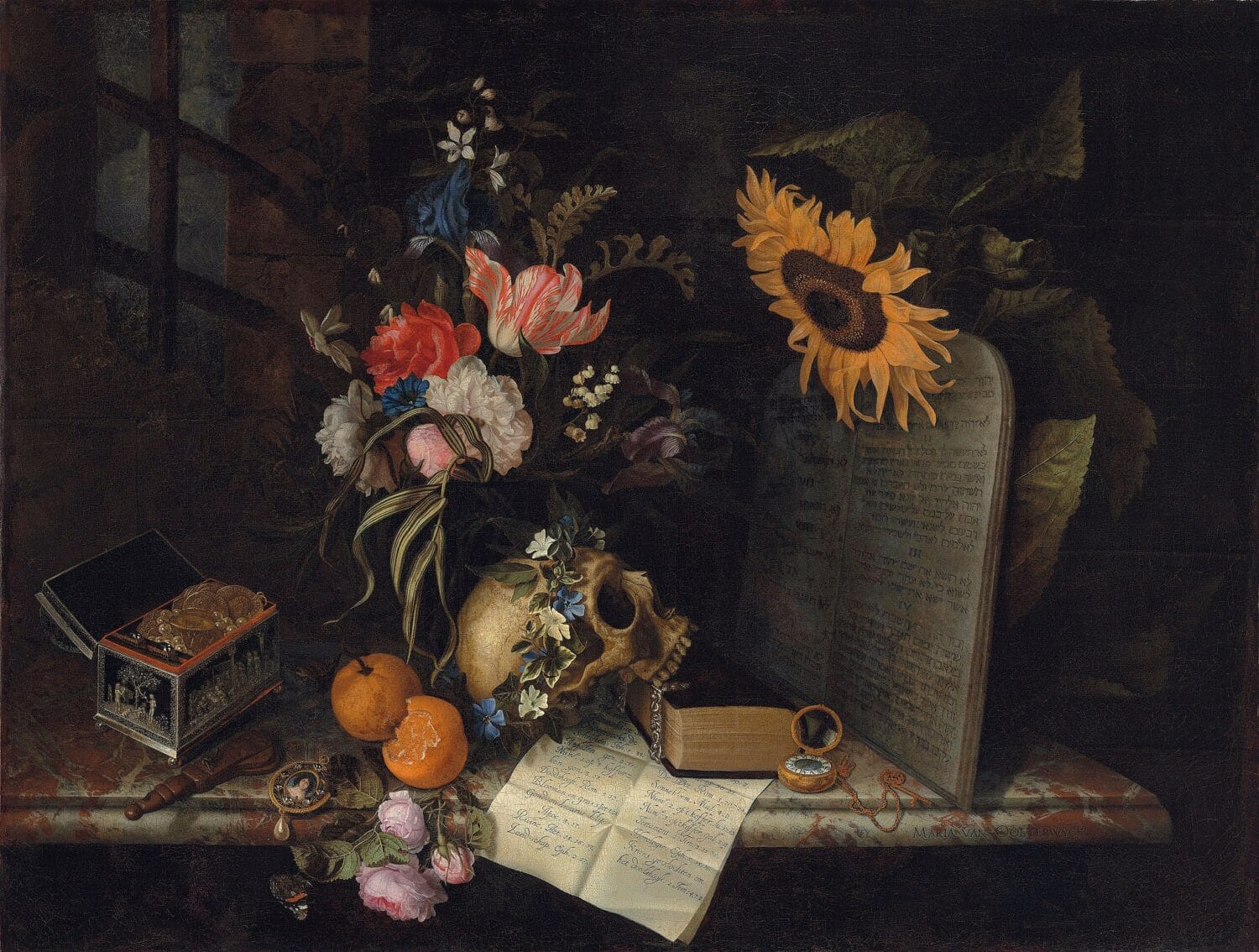
Jewelry represents wealth, luxury, and social status. In vanitas paintings, it emphasizes the appeal of material possessions while also warning that such objects are temporary. No amount of gold or gems can stop time or prevent mortality, encouraging viewers to focus on values beyond material gain.
Musical Instruments
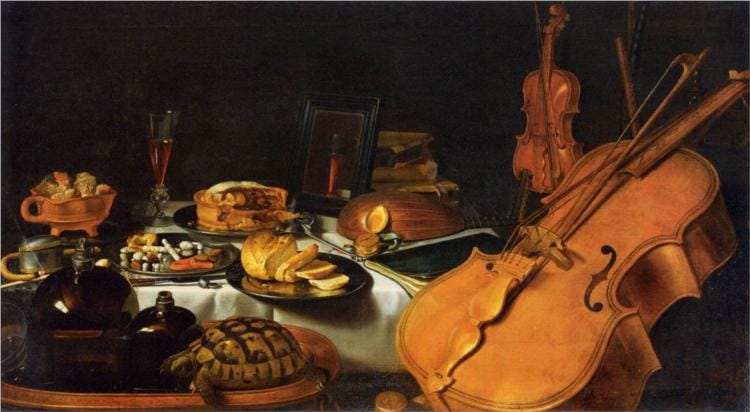
Musical instruments symbolize pleasure, creativity, and the enjoyment of life’s moments. Yet music itself is fleeting—the notes fade as soon as they are played. Instruments in vanitas paintings highlight the transience of enjoyment, suggesting that sensory pleasures, like life, are temporary.
Fruit
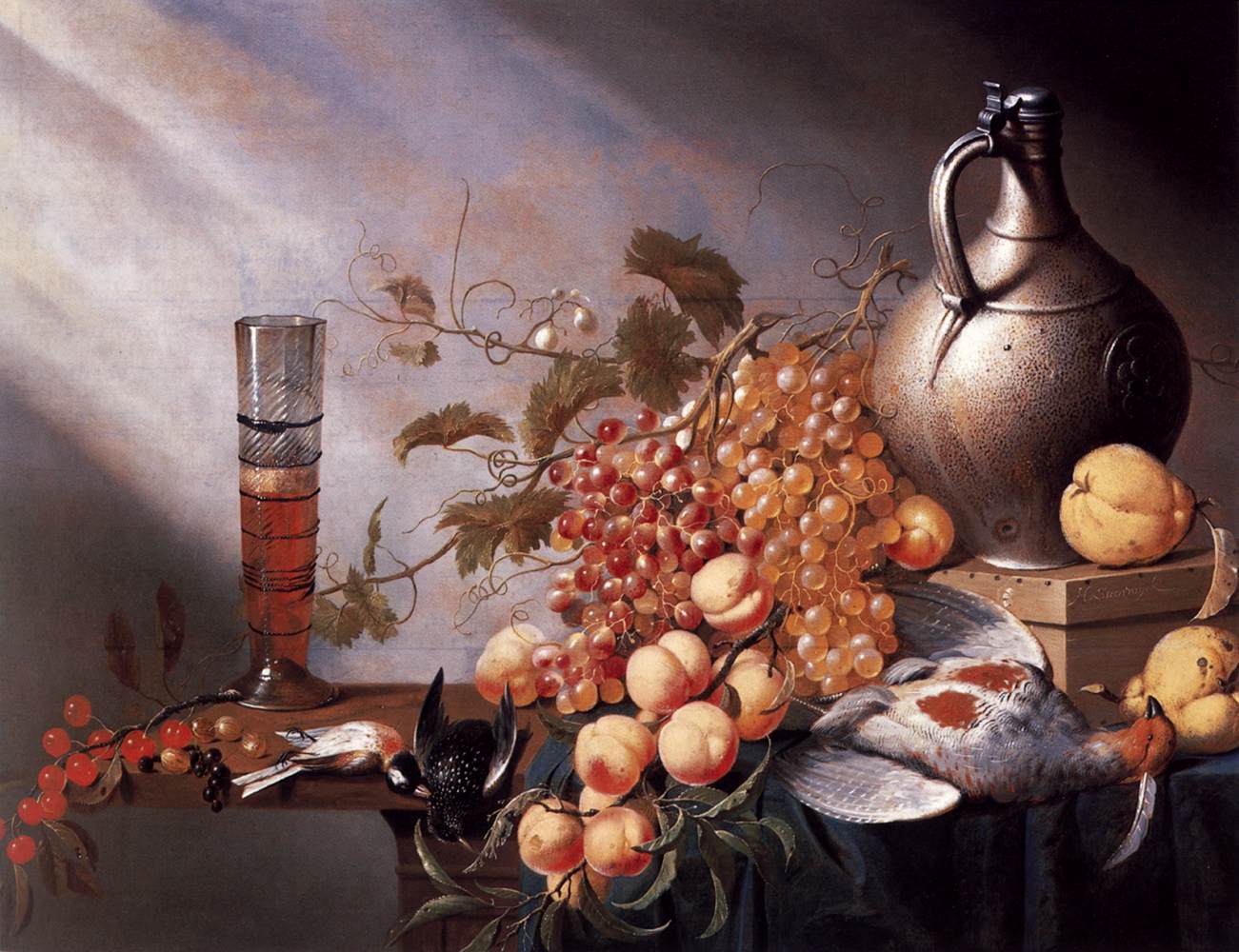
Fruit represents abundance, vitality, and life’s sweetness. Over time, fruit spoils and decays, reminding viewers that even the most enjoyable aspects of life are temporary. Its inclusion underscores the passage of time and the inevitability of decline.
Mirror
Mirrors reflect beauty, self-awareness, and, at times, vanity. In vanitas imagery, they caution against being overly focused on appearances. A mirror’s reflection is fleeting and deceptive, symbolizing that outward beauty fades and the inner life is what endures.
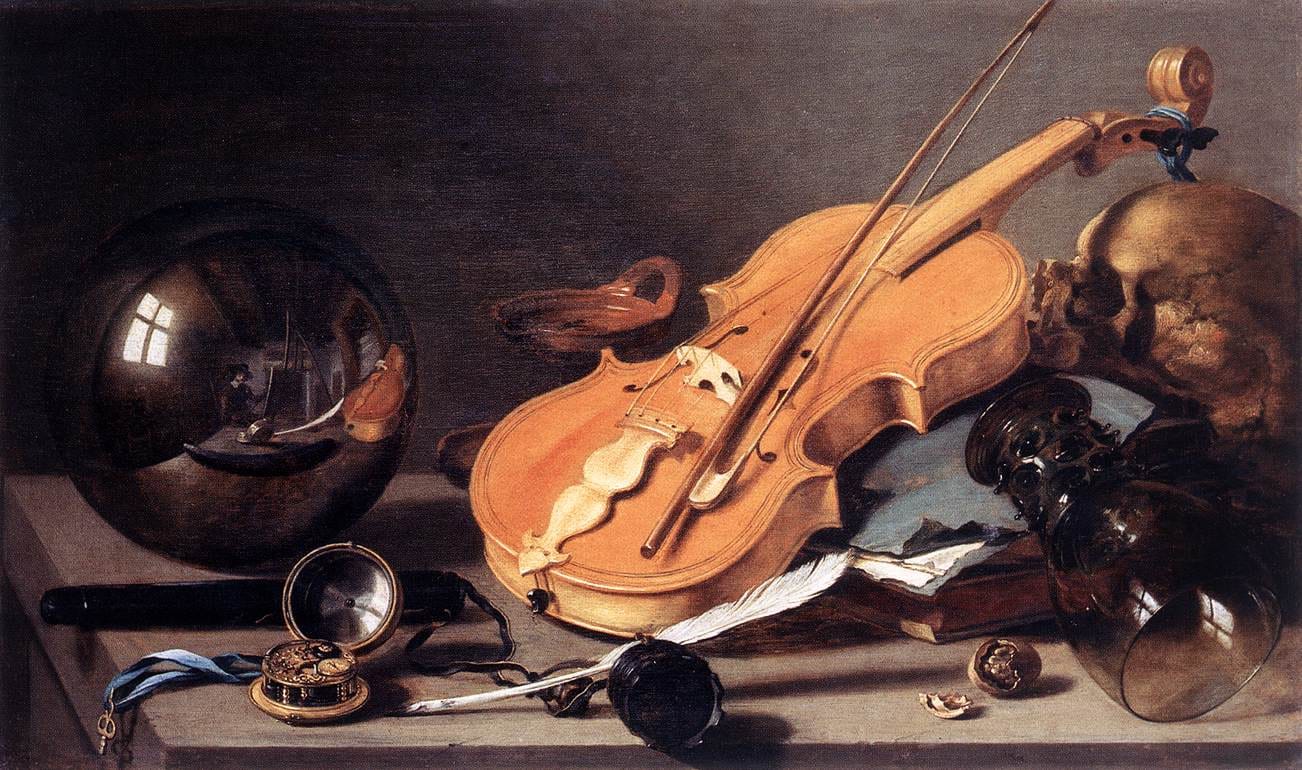
Smoking Items
Pipes, cigars, or extinguished incense symbolize fleeting pleasures and the passage of time. Just like smoke, enjoyment rises and disappears quickly. These items remind viewers that indulgences, while tempting, are temporary and cannot prevent the inevitability of mortality.
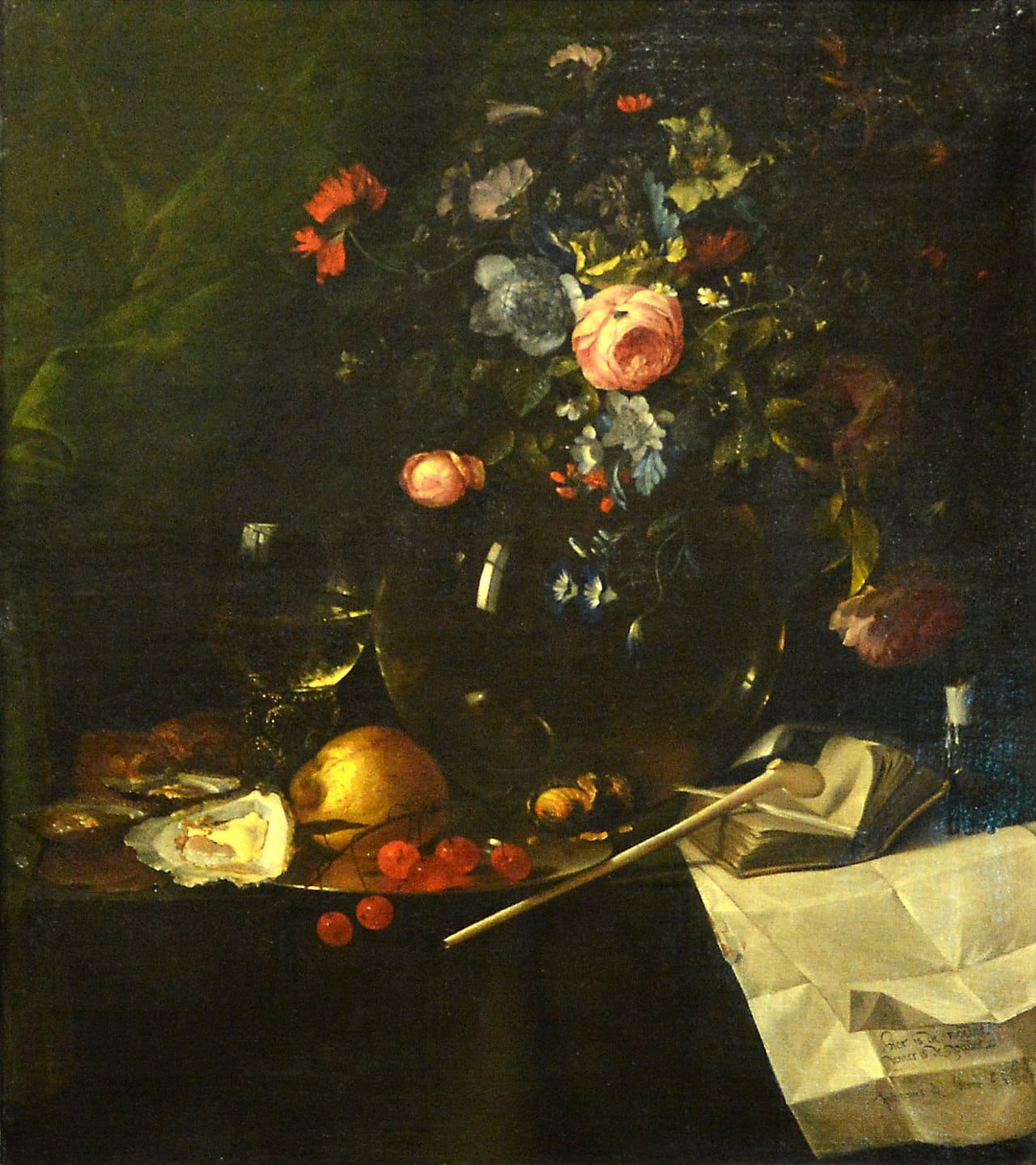
Glass or Drink Vessels
Glass objects, such as goblets or wine cups, highlight fragility and delicacy. Their beauty can be destroyed in an instant, serving as a visual metaphor for the fragility of life and the temporary nature of indulgence. They invite contemplation on both pleasure and mortality.
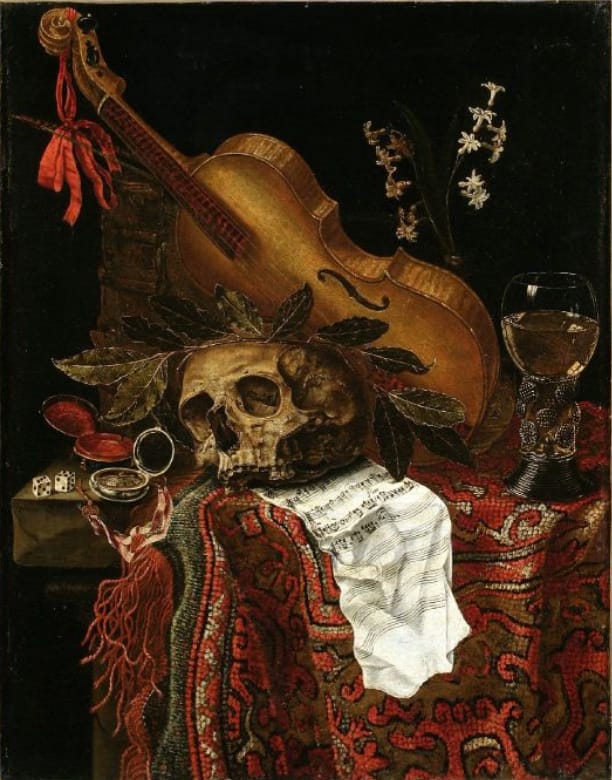
Clocks and Pocket Watches
Timepieces make the passage of time explicit. Clocks and pocket watches underscore that life is finite and constantly moving forward, whether we notice it or not. They encourage mindfulness and reflection on how we spend our limited days, reinforcing vanitas’ central message that time is precious.
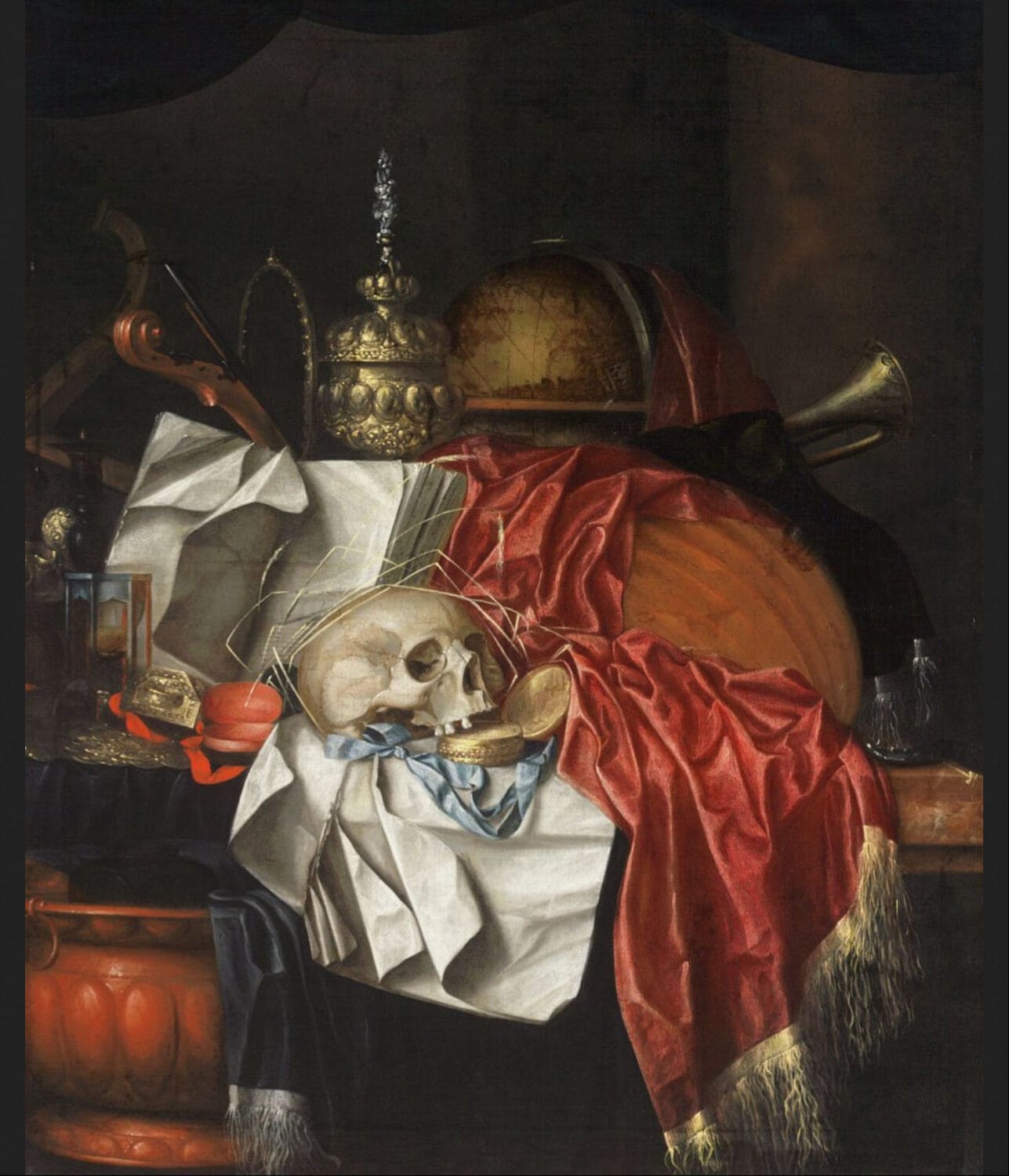
Bubbles
Bubbles in vanitas paintings are a delicate but striking symbol of life’s fragility and sudden impermanence. They appear bright and perfect for a moment, then vanish without warning, making them a simple but powerful reminder that beauty, pleasure, and time all disappear faster than we expect.
Conclusion
Vanitas paintings use these symbols to communicate a timeless message: life is fleeting, death is certain, and worldly pleasures and accomplishments are temporary. Each object—from the skull to the candle, the flower to the clock—invites reflection on mortality and encourages viewers to consider what truly matters. By engaging with these reminders, vanitas art challenges us to appreciate the present, seek deeper meaning, and focus on values that endure beyond life’s impermanent pleasures.